Think Tank
With the ambition to be a thought leader within the field of indoor environment, we have founded a neutral forum where we gather leading researchers and other experts that meet regularly to discuss trends, insights, research and the different aspects of indoor environment and how it influences buildings and people.
Let's introduce the experts

Philomena Bluyssen
Professor of Indoor Environment at Delft University of Technology
Prof. dr. Philomena Bluyssen is also a member of ASHRAE, ISIAQ, and CIB, and a board member of IAQS, and she has co-authored more than 300 publications in national and international conferences and journals. She wrote the Indoor Environment Handbook, for which she received the Choice Outstanding Academic Title Award in 2010.
Winner of the IDEC Book Award for Healthy Indoor Environment (March 2016). Created and designed SenseLab: A Playground for the Senses.
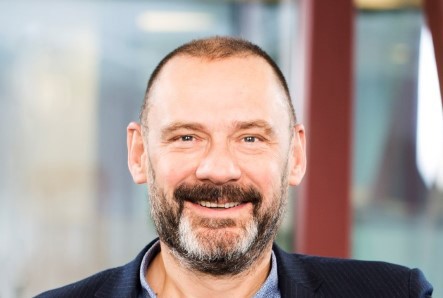
Lars Ekberg
Professor in Indoor Environment and Climate Technology and Consultant at CIT Renergy
Lars Ekberg is a research leader at the division of Building Services Engineering at Architecture and Civil Engineering, Chalmers University of Technology. He also consults at one of Chalmers Industriteknik's subsidiaries, CIT Renergy AB.
Lars' research is focused on the chain of issues from human needs and wishes through requirement formulation to the design, construction, and management of healthy, comfortable, and energy-efficient buildings.

Pawel Wargocki
Professor at the Department of Environmental and Resource Engineering at DTU
Assoc. Prof. Pawel Wargocki received his PhD from the Technical University of Denmark, where he has taught and conducted research ever since. He has more than 20 years of experience researching human requirements in various indoor environments (including poor IEQ affecting office work and learning performance in schools), ventilation and air-cleaning requirements.
Pawel has received several awards for his work from ASHRAE, ISIAQ and the Best Paper Award in Indoor Air. He is a member of the Academy of Indoor Air Sciences.

Andrei Vladimir Lițiu
Executive Director of the EPB Center and Building Performance Adviser at REHVA
With many years of experience in the design, installation, commissioning, operation and research of technical building systems, Andrei focuses on a thorough knowledge and understanding of the EU's decision-making process and EU's climate and energy policy framework.
Andrei strongly supports the digital transformation of Europe's building stock to enable and facilitate the arrival of healthy, safe, efficient, flexible and zero-emission buildings by 2050.

Anna-Sara Claeson
Associate Professor at the Department of Psychology and Deputy Head of Department at Umeå University
With research spanning psychology and environmental chemistry...

Sani Dimitroulopoulou
Professor at UK Health Security Agency and Head of the Department at Environmental Hazards and Emergencies
With research on indoor air quality, pollutant exposure and health effects...

Jelle Laverge
Associate Professor and Chair of the Department of Architecture and Urban Planning at Ghent University
Jelle holds an M.Sc. in architectural engineering, an ML in fiscal law and a PhD in engineering from Ghent University. They are a part-time attorney-at-law at Uniqum Advocaten and a member of ISIAQ, and ASHRAE.
Their research is focused on the design and assessment of the performance of ventilation and other IAQ management strategies. They translate that work into practice through their activities in CEN TC 156 and ASHRAE EHC.

Think Tank uncovers the hidden link – How indoor environmental quality can drive ESG reporting
Discover the hidden link between Indoor Environmental Quality (IEQ) and ESG Reporting. In an insightful article published by IPE Real Estate, the Swegon Air Academy Think Tank explores how indoor environmental quality (IEQ) plays a pivotal role in shaping ESG (Environmental, Social, Governance) reporting.
By integrating indoor environmental quality into ESG strategies, companies can strengthen investor relationships, build trust, and promote sustainable development across communities. The article delves into how sustainable building design and efficient building systems can reduce environmental impact and conserve energy resources. Social responsibility highlights the importance of the "invisible" indoor environment when it comes to enhancing employees’ health, improving well-being, and maintaining productivity. Proactive governance measures also demonstrate a commitment to compliance and responsible actions, fostering healthier indoor environments for indoor spaces.
Dive into the full article 'The hidden link – how indoor environmental quality can drive ESG reporting' to learn how better buildings lead to better business outcomes. This article was published at IPE Real Assets.
You can also download the article in PDF format
Find out more about Think Tank
A Think Tank with leading experts in the indoor environment was formed by Swegon Air Academy.